
The Moon and Greater Earth
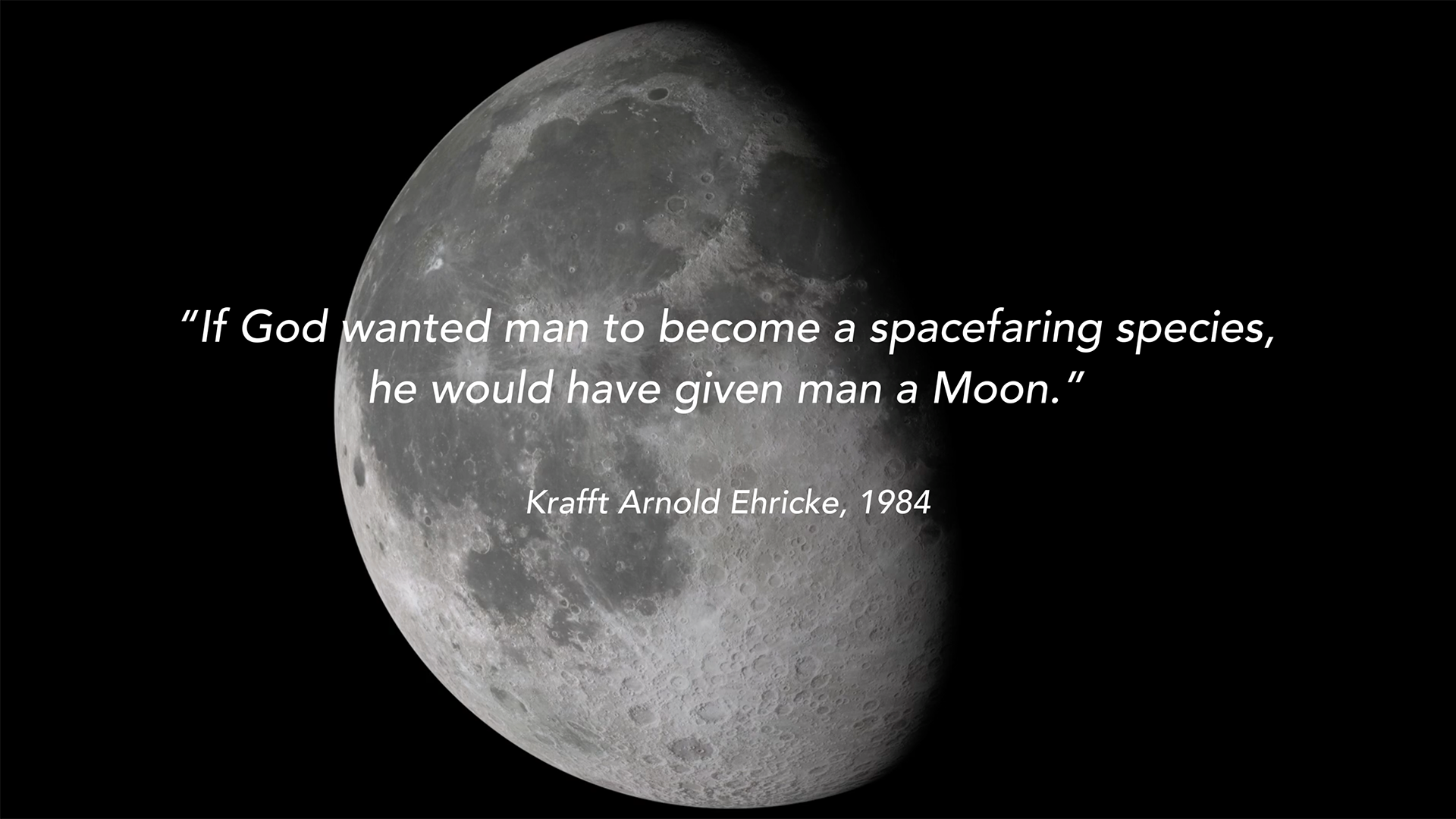
“If God wanted man to become a spacefaring species, he would have given man a Moon.”
Krafft A. Ehricke, 1984 [1]
Arthur Woods, May 1, 2026
Greater Earth is a region defined by the Earth’s gravitational field, which includes the Moon. The region outside Earth’s atmosphere and extending out to just beyond the Moon’s orbit, including the Earth-Moon Lagrangian points, is referred to as cislunar space and contains approximately 95% of all of humanity’s space assets. Geolunar space is the region from the Moon to the Earth-Sun Lagrangian points located 1.5 million km outwards where the Earth’s gravitational influence is counter balanced by that of the Sun [2]. As all celestial bodies of significant concentrated mass exert a field of gravitational attraction around their cores which extends to the point of tangential intersection with other celestial bodies, this marks the true cosmic boundary of our planet resulting in a sphere with a diameter of 3 million km which is a region we call Greater Earth [3]. This gravitational sphere of influence, which is defined by celestial mechanics and the laws of physics is also an interdependent dynamic system that contributed to the emergence and evolution of life on Earth which we call the Greater Earth System. Understanding the dynamic nature of this extended region of Earth and how it has functioned in a unique and incredible manner, adds insight on the future role of the human species in the evolution of life on Earth and in its relation to the cosmos.
The Formation of Earth and the Moon
Based on the standard model of cosmology, the Solar System was formed approximately 4.6 billion years ago from the gravitational collapse of a giant interstellar cloud of molecules consisting mostly of hydrogen with some helium, and small amounts of heavier elements fused by previous generations of stars. As this region collapsed it began to rotate faster and then flatten into a protoplanetary disc approximately 20 AU in diameter (1 AU = 150 million km) with our Sun – a dense protostar – at its centre which became increasingly hotter.
The Earth was formed approximately 4.54 billion years ago by accretion over a period of 10-20 million years as part of the circumstellar disk that grew out from the Sun. At the time of the formation of the Solar System most of the material in the inner Solar System was composed of dry non-carbonaceous matter resulting in the rock and metal compositions of the inner planets and asteroids, whereas most of the water rich carbonaceous objects were in the outer reaches. Observations have shown that these carbonaceous objects which are very black in colour and, from the outer asteroid belt outwards to the Kuiper belt, all the interplanetary asteroids are also black. Most researchers believe Earth’s primordial water came from these carbonaceous meteorites and asteroids impacting Earth over time, yet others believe the inner asteroids may have not been so dry in the early formation period. Earth orbits around the Sun in 365.26 days, a period known as an Earth year. During this time, Earth rotates about its axis about 366.26 times and as this axis is tilted with respect to its orbital plane, this results in producing the seasons.
The Earth’s moon, which has the Latin name Luna, is thought to have formed approximately 4.5 billion years ago, not long after the formation of the Earth. There are several hypotheses for its origin but the most widely accepted explanation, one first put forward by the planetary scientists William K. Hartmann and Donald R. Davis in 1975, [4] [5] is that the Moon was formed from the debris left over after a giant impact between proto-Earth and a Mars-sized body called Theia. In Greek mythology Theia is a Titan goddess and mother of Selene, the goddess of the Moon [6]. The impact blasted material into Earth’s orbit and this material then accreted into a more spherical body under the influence of its own gravity thus forming the Moon. One problem with this theory is that such an impact would have invariably sped up the rotation of the Earth far beyond what we observe today.
To offset this anomaly, some scientists including Dr. Robin Canup at the San Antonio-based Southwest Research Institute who has written a book titled “Origin of the Earth and Moon” have suggested that a second collision “Big Whack II” coming from another direction would have been necessary [7]. Considering the stabilizing influence the Moon has had on Earth’s rotation, this second impact would have been an incredible coincidence. In addition, biochemical analysis of lunar materials carried out by Ruzicka, Synder and Taylor provide no evidence that the Moon was derived from the Earth and suggests that some objects with lunar-like compositions were produced without involvement of the Earth. This has added additional uncertainty to the big impact and dual impacts theories [8].
In any case, Earth’s initial rotation was a vestige of the original angular momentum of the cloud of dust, rocks, and gas that coalesced to form the Solar System. This primordial cloud was composed of hydrogen and helium produced in the Big Bang, as well as heavier elements ejected by supernovas. As this interstellar dust is heterogeneous, any asymmetry during gravitational accretion resulted in the angular momentum of the eventual planet. As mentioned above, this primordial rotation rate would have been reset by the impact of the Theia object 4.5 billion years ago. Regardless of the speed and tilt of Earth’s rotation before the impact, it would have experienced a day some five hours long after the impact resulting in very high winds on the surface. Tidal effects have then slowed Earth’s rotational period rate to its current 24 hours [9].
The Moon is Earth’s only permanent natural satellite and is the only celestial body to have been visited by humans. It is the fifth largest natural satellite in the Solar System, and the largest among planetary satellites relative to the size of the planet that it orbits. After Jupiter’s satellite Io, it is the second-densest satellite among the moons in the Solar System whose densities are known. It is a third larger than the dwarf planet Pluto that has a diameter of 2,370 km [10].
The Moon’s diameter is 3,476 km compared to 12,742 km of the Earth’s. The surface area of the Moon is about 38 million km2 which can is comparable to the continent of Asia which has a surface area of 44 million km2. The Moon’s gravitational force is about 16.6 percent or one-sixth that of the Earth’s gravity [11]. The Moon is slightly larger than one-fourth or more precisely 27.322 percent the size of the Earth which is approximately 366% larger than the Moon. An interesting coincidence, the Moon orbits our planet at a rate of once every 27.322 Earth days, and it makes 366 orbits of Earth every 10,000 Earth days [12].
The distance from the Earth to the Sun is 150 million km which called one astronomical unit or AU. There is a coincidental aspect about this distance between the Earth and the Sun which also relates to the Moon. To understand it we need to realize that there are 109.2 Earth diameters (12,742 km) across the Sun’s diameter (1,391,426 km). There are also 109.2 Sun diameters between the Earth and the Sun at its furthest point of orbit (151,943,763 km). If one divides the equatorial circumference of the Moon (10,921 km) by 100 the result is the number 109.2. Likewise, if one multiplies the circumference of the Moon (10,921 km) by the circumference of the Earth (40,075 km) which equals 437’659’075 and divide by 100 the result, which is accurate to 99.9%, is the circumference of the Sun (4’376’590 km). The ratio of Earth’s diameter to Moon’s diameter is 0.273. The Moon is 27.3 % the size of the Earth and orbits our planet at a rate of once every 27.322 Earth days. The ratio of the Sun to Earth is 109.2 = 4 x 27.3 [13].
The Moon is in synchronous rotation with Earth always showing the same face and, because its orbit is not circular, it is sometimes closer to the Earth than at other times. Its near side is marked by smooth dark volcanic maria (Latin for “seas”) that fill the spaces between the bright, rougher ancient crustal terrae (“lands”) highlands and the prominent impact craters. Its surface is actually dark although it can appear very bright white with a reflectance just slightly higher than that of worn asphalt [14]. After the Sun, the Moon is the second-brightest regularly visible celestial object in Earth’s sky, as measured by illuminance on Earth’s surface.
The Moon’s current orbital distance from the Earth at an average distance of 384,403 km which is approximately thirty times the diameter of the Earth with its apparent size in the sky almost the same as that of the Sun, resulting in the Moon covering the Sun nearly precisely in total solar eclipse. This is because the Moon is 400 times smaller and 400 times closer to the Earth than the Sun which is another unusual astronomical coincidence. However, this matching of apparent visual size will not continue in the far future. The Moon’s linear distance from Earth is currently increasing at a rate of 3.82 ± 0.07 cm per year, but this rate is not constant. A study published in 2019, shows that the Moon is actually shrinking, getting thinner by almost 50 m over the past several hundred million years, and this is causing wrinkles on its surface as well as moonquakes [15].
Some researchers believe that the elements of water, particularly hydrogen may have been an ingredient in Earth’s formation accreting from the solar nebula [16]. As large deposits of water in the form of ice have been detected in the permanently shadowed polar craters of the Moon, additional research will be needed, not only about how the Moon was formed but also about its relevance to the creation of water on Earth. Research published in 2019 suggests that, with regards to the big impact theory, Theia possibly originated in the outer Solar System and may have delivered large quantities of water to Earth. According to these scientists, the collision could have provided sufficient carbonaceous material to account for the entire amount of water on Earth which later enabled life to appear [17] [18].
The Moon and the Earth can be viewed as an interdependent system in which the Earth’s gravity keeps the Moon in orbit. The Moon’s gravitational influence on the Earth produces the ocean tides, earth or body tides, causes the slight lengthening of the day and influences its rotation period. This influence also accounts for the bulge around Earth’s equator and, likewise, the Earth’s gravitational influence causes a similar bulge to the Moon’s equator. Because the force of gravity is stronger for the water on the side closest to the Moon, water falls faster towards the Moon and rises up the near-side tidal bulge. And because the gravitational attraction is weaker on the far-side, the water falls more slowly towards the Moon than the rest of the Earth. Approximately twice a month when the Sun, Moon and Earth form a line called a syzygy (an alignment of three or more celestial objects in a gravitational system); the tidal force due to the Sun reinforces that due to the Moon. The Sun causes a second set of tidal bulges that point in the direction of the Sun, but the strength of those tides is less than half of those due to the Moon [19]. The Moon’s 28-day orbit acts as a stabilizing influence on the obliquity of Earth’s spin axis causing it to be stable for extended geological periods and preventing climatic extremes.
In earlier times, the Moon was much closer to the Earth, and its gravitational influence was much stronger, leading some scientists to believe the Moon played a significant role in the early evolution of life as the enormous tidal forces may have catalysed reactions within the organic soup of early Earth. Over millions of years, Earth’s rotation slowed significantly by tidal acceleration through gravitational interactions with the Moon and the Sun. The gravitational influence of the Moon may have played a significant role in the Earth specific phenomena of plate tectonics and continental drift, forces that may also have been important to the evolution of life on Earth. Plate tectonics does not occur on Venus which has no moon, nor on Mars which moons are too small to have significant tidal effects on the surface [20].
Recent astronomical discoveries indicate that Earth-like planets are common in the habitable zone of stars, and statistical research shows that planets with massive, obliquity stabilizing moons may occur only in approximately 10% of these [21]. However, when one considers that the appearance and evolution of life on Earth over the past 3.7 billion years has not been a linear natural selection process but rather a haphazard series of fortunate circumstances with many starts and stops, including a number of mass extinctions along the way, yet the stabilizing influence of the Moon has enabled life on Earth to survive and thrive. We must ask ourselves just how often similar circumstances converged, if at all, in the history of the vast universe.
The presence of the Moon in the region of Greater Earthhas created an interactive, interconnected biological and geophysical system that for billions of years has led to the appearance, evolution and maintenance of a living planet. Thus, the formation of the Greater Earth System - an interplay between the Sun, the Earth, and the Moon - was a result of incredibly fortunate cosmic coincidences, including Earth being at the right distance from the right kind of star, having the right size, density and composition, then having an opportune collision with another celestial body which created the Moon. Earth’s moon provided a gravitation influence which helped to stabilize the climate and catalyse the evolutionary processes of life that eventually led to the appearance of an intelligent technological species that has now enabled planet Earth to become both self-aware and capable of spreading life from Earth to other places in the immediate cosmos.
Click for References and Notes



